
It was a couple of years ago that I heard an interview with a historian and author by the name of John Dickson. I found him to be fairly interesting, so I went and looked up his podcast and started listening. I was quickly hooked, and Undeceptions has become my favorite, and most recommended, podcast.
I find Dickson’s communication style to be particularly engaging. His lighthearted and winsome spirit is apparent, and he doesn’t shy away from difficult topics. His podcast covers a huge array of topics, from culture to literature to theology to philosophy to history. Dickson’s background is just as broad. He holds a PhD and has a focus on ancient history. He was a singer-songwriter for a 90s rock band. He is ordained by the Anglican Church of Australia, and served as the senior minister of a church there for 10 years. He has appeared on television, produced and and presented documentaries, written a lot of books, founded the Centre for Public Christianity in his hometown of Sydney, Australia, launched not only a podcast but a podcast network, and recently hosted his first Undeceptions conference.
Last fall, Dickson began working at Wheaton College in Illinois. As I was prepping my sabbatical, one of the goals I had was to learn to better communicate the gospel. That led me to take a shot in the dark and reach out and see if I could meet with Dickson. I was delighted when I received a response back, and we scheduled a meeting.
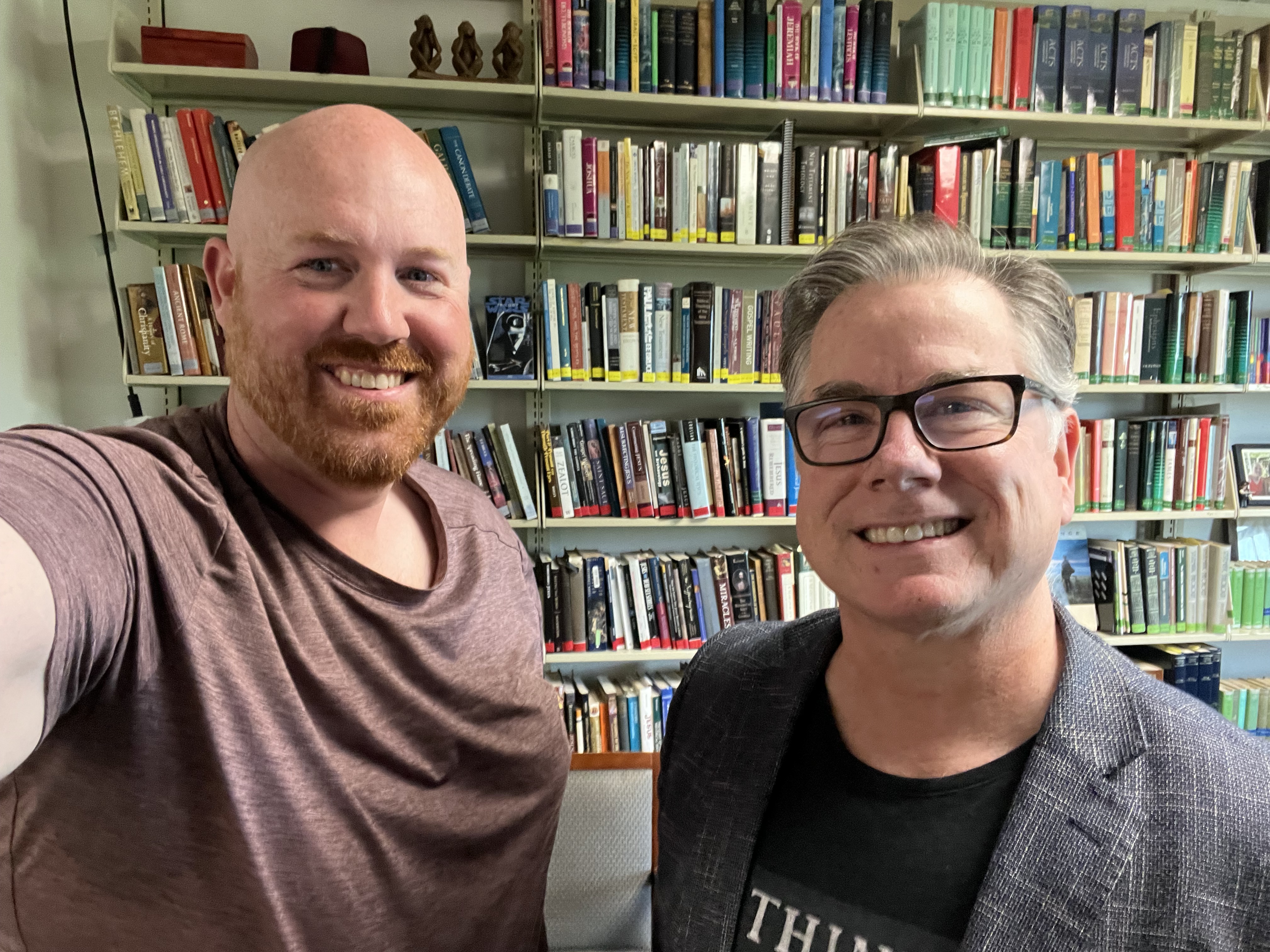
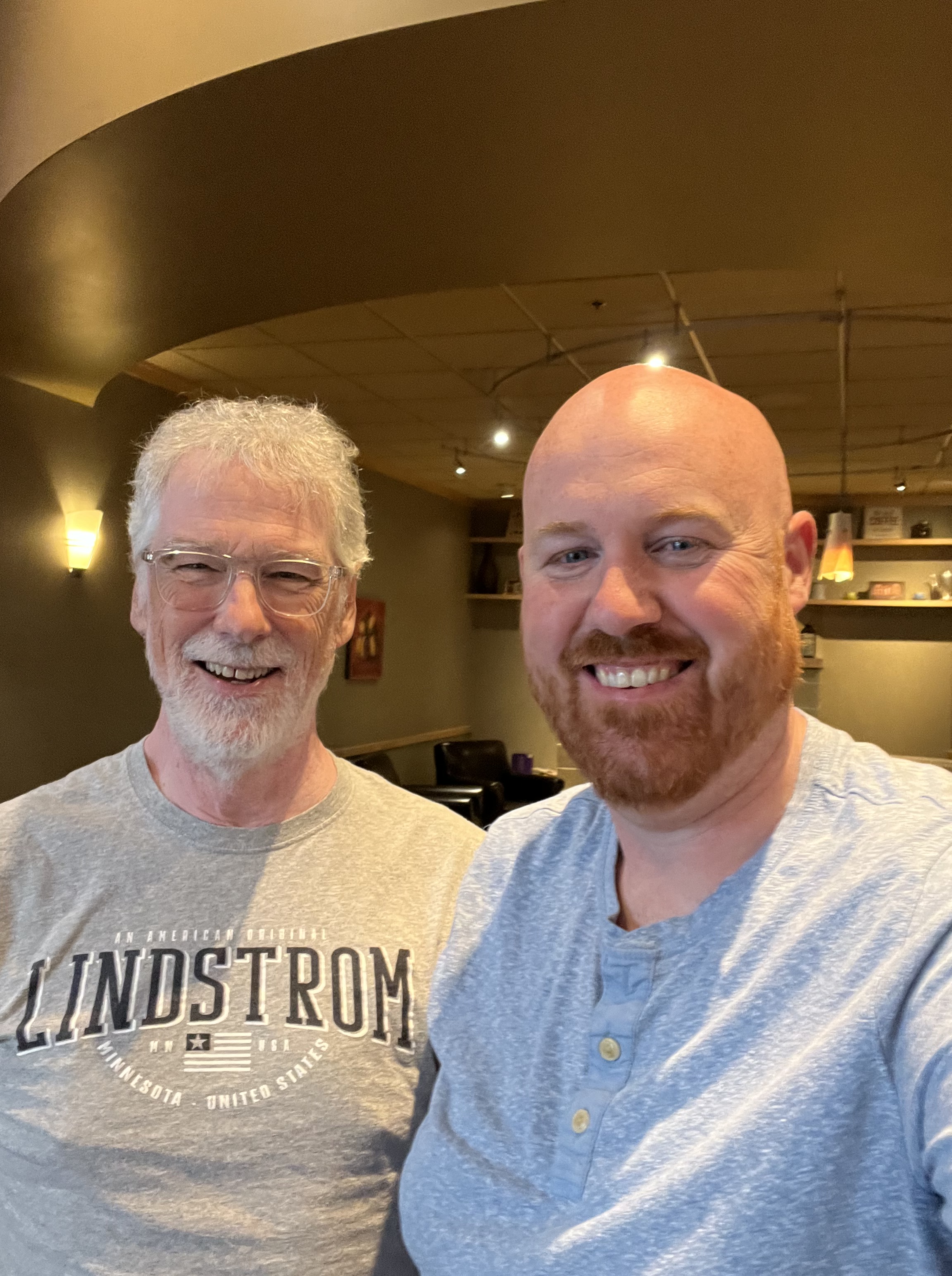
John was as kind and welcoming as I could have hoped. We met in his office at Wheaton, and I immediately felt comfortable in the room – it was filled with theology and history books and recording equipment, with a guitar resting in the corner. Definitely my kind of place.
I wanted to get a sense of what kind of guy John was. I started by asking about how John viewed his calling, and he had a quick and ready answer: “Make Christ public and help other believers do the same in doubting times.”
The focus of John’s ministry, whether as an author, teacher, podcaster, or presenter, has been to proclaim the gospel, especially to those who are doubters or seekers. Coming from Australia, John has experience communicating biblical truth in an post-Christian context. In 1971, 86% of Australians identified as Christian. In 2021, that number was less than 44%. In America in 1971, 90% of the country identified as Christian. Today, that number is 63% and is declining rapidly.
That means that American believers today, and especially in the near future, will be trying to communicate biblical truth in an entirely different cultural climate than we have in the past. That should be apparent, especially in the conversations that have surrounded controversial issues over the last few years. As John put it, “we have to hold all the convictions of classical Christianity without any hint of structural power.” Without a Christian majority, there is no longer (or, in the near future, will no longer be) a cultural viewpoint of a Christian moral authority.
That means we need a different approach. Often times Christians have approached people with a sense of superiority, a sense that we can, and should, tell people what they need to do. But, when speaking to skeptics and doubters, that isn’t a strategy that is going to open them up to hearing the good news. Those skeptics and doubters are going to hold a number of beliefs that they are going to feel gives them the moral high-ground; especially on issues related to healthcare and sexuality.
The stance many Christians over the years have taken is to let go of some of those beliefs that have been seen as orthodox over the history of the church, leading to what we refer to as “liberal Christianity.” But that isn’t an acceptable option for many of us. We need to learn to better communicate biblical truth in a way that is shows that we care about the other person, despite any disagreements we may have with them. Sounds a little like what Paul was talking about in Ephesians 4 when he talked about speaking the truth in love.
That idea hits a tone of conviction in my heart. I confess that, at times, I’m more interested in being right than I am winning someone over. I think there are a lot of Christians that find themselves in the same boat. Our evangelistic efforts can’t be focused first and foremost on us being right if they are going have any fruit. It isn’t that we should sacrifice truth to win a person over, but we also shouldn’t sacrifice a person to prove that we’re right. Christian virtue signaling doesn’t do anybody any good.
Any time we are talking with someone about the good news, we need to remember that it isn’t about us, it’s about Him. We need to love first and foremost, and our pride needs to be put to death. John made a pretty simple statement to me that has stuck with me. “The choice isn’t ‘liberal’ or ‘jerk’.”
I hope and pray that I, and we, learn to do this better.




 Driven