Don’t Cough On Me

Last week my family and I went shopping at Walmart. That used to be insignificant, but now it’s sort of a treat for my girls to get to go shopping. The location we were at does not require face masks, and few shoppers wear them. My family did, largely because I want my girls to get used to them in the event that there is a statewide mandate or they have to wear them more often. I often do not wear a face mask myself unless I am asked to, or there is a large percentage of people at a particular location wearing them. I don’t care that much one way or another.

While we were walking through the store, I saw a guy eyeballing me from up ahead. He was a younger, tall, muscular guy who was wearing a smedium shirt and no face mask. As he passed by, I noticed he was unusually close to my cart, and just as was about to pass me, he turned his head towards me and coughed. I felt it on my face.

So, I immediately turned, punched him in the head and knocked him out, while my daughter Bella cheered me on.

Just kidding.

My immediate reaction was a bit of shock: did he mean to do that? That’s the kind of thing other people have been arrested for around the country! Is he walking around trying to start a fight? Maybe he’s just an idiot and didn’t realize what he did-I am a firm believer in the stupidity of humanity.

Ultimately, I don’t really care. I’m not paranoid about the ‘rona. If I get it, I get it. But what strikes me, especially in light of this incident, is how disconnected from each other we’ve been. We’ve got people fighting retail employees for doing their job and asking people to put masks on. We’ve got others melting down because someone disregarded the aisle arrows at the grocery store. There’s no grace. There’s no care. There’s anger, and fear, and hate.

Why can’t we just respect each other? If a business or city (or state) requires a mask, then put it on and stop complaining, or simply don’t do business there. If you are a business or city that requires masks, understand that people can make choices for themselves, including where they do their business. If you don’t like what your city or state has decided-elections have consequences. Vote for someone else next time.

If you think everyone should wear a mask, have some understanding that there is a lot of conflicting data as to whether or not they really matter, and some people simply are going to choose not to wear them if given an option (data does show social distancing to be very significant in preventing the spread, which is worth noting as cases are skyrocketing around the country). 

If you are a person that isn’t going to wear a mask, remember that there are a lot of people who are afraid, who have lost loved ones to Covid-19, who have preexisting medical conditions, and who simply cannot remain at home for the entirety of the pandemic. Show them some love and consideration, and if you can love them better by wearing a mask, then wear a mask or give them a lot of space.

There are a lot of emotions going in a lot of directions right now. Don’t let your emotions cause you to forget what’s right:

“Teacher, which is the great commandment in the Law?”

And he said to him, “You shall love the Lord your God with all your heart and with all your soul and with all your mind. This is the great and first commandment.

And a second is like it: You shall love your neighbor as yourself.

On these two commandments depend all the Law and the Prophets.”

Mathew 22:36-40

“The Second Coming”, by W.B. Yeats

This poem, written by Irish poet W.B. Yeats in 1919, is a rather dark view of a world that he felt was failing. I think it holds significant relevance today. While it holds spiritual imagery, it is not written as a “Christian” poem.

Pay attention to his imagery related to the problem, especially in the first verse: “the falcon cannot hear the falconer”, “the centre cannot hold”, and “the best lack all conviction…”.

I pray that, today, godly men and women would have conviction and be filled with passionate intensity.

Turning and turning in the widening gyre
The falcon cannot hear the falconer;
Things fall apart; the centre cannot hold;
Mere anarchy is loosed upon the world,
The blood-dimmed tide is loosed, and everywhere
The ceremony of innocence is drowned;
The best lack all conviction, while the worst
Are full of passionate intensity.

Surely some revelation is at hand;
Surely the Second Coming is at hand.
The Second Coming! Hardly are those words out
When a vast image out of Spiritus Mundi
Troubles my sight: somewhere in sands of the desert
A shape with lion body and the head of a man,
A gaze blank and pitiless as the sun,
Is moving its slow thighs, while all about it
Reel shadows of the indignant desert birds.
The darkness drops again; but now I know
That twenty centuries of stony sleep
Were vexed to nightmare by a rocking cradle,
And what rough beast, its hour come round at last,
Slouches towards Bethlehem to be born?

Rewind: Dirty

This is one of my favorite past posts, originally written in 2011. I thought it was worth revisiting now. I hope it challenges you as much as it challenges me.

Sometimes the way I read my Bible is a little delusional.

Take, for example, the story of Hosea. I used to love that story. God tells his prophet Hosea – a spiritual leader, one of those “church guys” – to go out and marry a prostitute. Not a reformed and repentant prostitute either; he is supposed to go up to some street-walker and take her into his home. I can only imagine what would happen today to the church where the pastor spontaneously marries a prostitute.

Hosea obeys. Apparently he and his new wife Gomer get along OK, because they have a child in relatively short order. However, two more children are born shortly thereafter, whose names are “No Mercy” and “ Not My People.” What kind of father names his child “Not My People”? No father does…that’s the point. Hosea 1:3 says that Gomer “bore [Hosea] a son,” but verses 6 and 8 simply say that Gomer gave birth to children. These children were not Hosea’s.

The message of the story is dramatic. God is telling His people that they are cheating on Him, that “the land commits great whoredom by forsaking the Lord.” (1:2, ESV) God isn’t pulling any punches here, He is stating it the way it is. Instead of being passionately, deeply in love with the groom, the bride is out sleeping with whoever she can pick up off the street.

Reading this story in the past, I have often pointed to the sinfulness of Israel, to God’s patience and kindness, and to how generally sinful humanity is. My problem was that I never really saw the personal message for me in the story. As I put myself into the story I was always an observer to the story, someone watching the pain of Hosea and the ridiculous rebellion and rejection by Gomer with sympathy; or I would identify with Hosea, understanding the feelings of helplessness and rejection.

My problem was that I wouldn’t accept the fact that, in the story, I am Gomer. I am the prostitute that was rejecting my Groom. I am the one that is continually walking away from the One that saved me, that loves me in spite of myself and is willing to provide for my every need.

It hurts to put ourselves in the role of Gomer because it becomes painful. We begin to see our rejection of God clearly and we begin to have an idea of the pain that we cause God. We have to come face-to-face with the ridiculousness of our choices: that we have walked away from something so good for something so terrible. We have to say, “I am the prostitute, whoreing myself out to whomever I meet.” That hurts.

However, the story doesn’t end there. Despite the rejection, the deception, and the pain God sends Hosea back out to get Gomer. Even after the adultry and two illegitimate children, Hosea takes her back. It isn’t even Hosea being willing to accept her after she comes crawling back full of apologies and remorse. Hosea has to go out, find his wife, and even pay for her; things have become so bad for this unrepentant adulteress that she has fallen into slavery.

Like Gomer, we have to recognize that, on our own, we are at a rock-bottom level of hopelessness. But God hasn’t given up on us; He still wants us and will redeem us. He loves us so much that He has paid for our rebellion and our mistakes. Despite the terrible things we have done to Him, He is still there to bring us home. On the other side of the pain we feel in understanding our rebellion and extreme sinfulness is a joy and a love that we otherwise could not understand.

God is desperately, passionately, deeply, and completely in love with you. Despite whatever it is that you’ve done, He is still there to pay the debt and bring you home, without any worry of guilt or resentment. Return to Him with joy and feel His love surround you as He holds you in His arms and carries you home.

Trust the process. Or blow it up. Whatever. But be in it.

The fallen Christopher Columbus statue outside the Minnesota State Capitol after a group led by American Indian Movement members tore it down in St. Paul, Minnesota, on June 10, 2020.

OK, so everyone’s still mad about everything, so let’s keep it up with the politics.

A couple of weeks back, a group of protesters pulled down the Christopher Columbus statue at the capital in Saint Paul. At first glance, it seemed to be another act of destruction in the rioting that has been happening since the inexcusable death of George Floyd. But it wasn’t.

It wasn’t, because the authorities at the state capital were informed several hours previously that the protesters intended on pulling down the statue. There was a plan in place, and it was publicly known. The state patrol, which are capital law enforcement, were ready to be sent out. The destruction could have been stopped. But it wasn’t stopped.

Instead, a group of capital leaders met with the leaders of the protest. Then, the state patrol stood to the side until the statue was brought down, then secured it shortly afterwards so that workers could remove the damaged statue and base to a storage facility.

The protesters were angry about racial injustices, and Columbus has been a frequent target for decades now, especially from Native American groups. In fact, MN Lieutenant Governor Peggy Flanagan, a member of the White Earth Nation of Ojibwe, said afterwards; “I can’t say I’m sad the statue of Christopher Columbus is gone. I’m not.” (you can read a very good article on the incident here)

Now, I don’t want to get into a debate about whether or not the statue should have stayed at the capital. I want to talk about process here.

In life, there are right actions and wrong actions. Thats the way things work. But, there are also right ways to do right things, and wrong ways to do right things. This was the wrong way to do this, whether or not the act of removing the statue was right. It was the wrong way for a variety of reasons, the first of which is that there is a process to remove statues and pieces of art, and guess who is in charge of the group that oversees those monuments: MN Lieutenant Governor Peggy Flanagan!

Across the nation people are upset about our current political climate. Approval ratings for our government officials are extremely low. People are constantly complaining about all kinds of things. But, the truth of the matter is that most people aren’t willing to do anything about it.

There is a way that things work. Our country operates by a two-party system. Each party breaks itself down from the national political organization to local precincts and caucuses. Starting at the bottom, candidates are endorsed, platforms are changed and priorities are set, and they move up the ladder to the national group. Change can happen slow, but when there is a wave of people pushing in the same direction it can change very quickly as well.

A quick aside: I really, really don’t want to be partisan on this, but I feel like it should be pointed out that most of the cities that have seen the most dramatic protests in the last several weeks, including Seattle, Minneapolis, Atlanta, and Baltimore, have been under largely one-party control for decades. People are upset about the system, but they keep voting the same types of people with the same perspectives, with little or no diversity of political thought, over and over and over again. In Minneapolis, the city has been in a process of voting in candidates that are more and more and more liberal, year after year, and they keep demanding more and more of that liberal thought, yet it ends up being conservatives that get the finger pointed at them. I don’t get it.

People get upset about where our politics and our government is at, but as someone who has been involved at several levels of the political process with the Republican Party for many years, I can tell you that very few people are interested in the process. Precinct meetings are sparsely attended. Not that many votes are cast there. Most people wait until the final elections in November, which is probably something like Step 117 of the process, and then they complain about not having a voice in that process.

Don’t like the process? Fine – step up and get it changed. Make your voice heard. That’s why I’ve been a part of the process. My schedule isn’t lacking in things to do, but I’ve made it a priority because I want to help see good people put into positions of authority, and the local level is where it starts. I’ve stood up in front of rooms of strangers and campaigned against candidates that I didn’t believe would serve the people well, as well as actively push candidates that I feel will serve us well. This year, I sat out of the process in protest of decisions made by state leadership. Next year I’ll likely be back, trying again to help make our nation a better place.

It isn’t easy. It usually isn’t fun. There isn’t much one person can do. But I’ve met many men and women that share my beliefs and perspectives, that are working in the same spirit that I am. I also pray that there are those in the other party that are trying to do the same thing there.

We need to see changes made in our nation. Some of them are personal, some of them are cultural, and some of them are political. I hope that we are all committed to doing our part and putting in the time to affect positive changes, the right way, for the good of everyone.

A woman, to Benjamin Franklin: “Well Doctor, what have we got, a republic or a monarchy?”

Benjamin Franklin: “A republic, if you can keep it.”

Freedom and ‘Merica.

OK, so everyone’s already mad about everything right now, so let’s just do some politics on here. What can it hurt.

My little girls are 4 and 6 now, and they’re hitting an age where they are really embodying the stubbornness of their parents. One of the most common phrases in our house right now is, “I don’t wanna.” It can be used for anything from picking up some toys to eating food on their plates.

Its also fascinating (thats the nice word for this) to see that they know better. We will very often have this conversation:

Father: “Do the thing.”

Offspring: “I donn’t wanna.”

Father: “But I told you to.”

Offspring: “I know.”

Father: “You know you have to do what your parents say.”

Offspring: “Yeah.”

Father: “And I told you to do the thing.”

Offspring: “Yeah.”

Father: “So do it.”

Offspring: “But I don’t wanna!”

As a dad of 2 girls, I’m getting used to the idea that logic will never mean anything in my house.

We all do this all the time. We know the right thing, we know the reasons, but we don’t wanna, so we either justify around it or we ignore it entirely. Now to the politics:

Many of us are fiercely independent Americans. We do what we want, when we want, ’cause Freedom and ‘Merica. We do what the government tells us to do only when it’s convenient to follow the rules, ‘cause Freedom and ‘Mercia. We let common sense rule rather than some suit in Saint Paul or Washington DC, ‘cause we know better, and Freedom and ‘Merica (even though, if we’re honest about ourselves, our common sense is questionable at best).

But, is that what the Bible says? Is that what is right? Because our focus isn’t supposed to be on Freedom and ‘Merica, its supposed to be on the gospel, on the cross, on loving God and loving others, and on doing the right thing, all the time, not matter what.

In Romans 13, Paul is writing to Christians in the belly of the anti-Christian beast, Rome. They’re surrounded by paganism and by governmental authorities that, in the best of times simply reject and ignore Christians and, in the worst, actively try to kill them. Still, Paul tells Christians:

Let every person be subject to the governing authorities. For there is no authority except from God, and those that exist have been instituted by God. Therefore whoever resists the authorities resists what God has appointed, and those who resist will incur judgment.

Romans 13:1-2

That is one of those passages that we like to tell ourselves that it doesn’t mean what it says, even though it clearly means what it says. But lets see if we can wiggle out of it: Paul goes on in the following verses to talk about doing right and wrong, and basically says if you do the right thing then you have nothing to fear from the authorities over you-its the idea that you don’t worry about seeing the highway patrol on the roads if you’re driving the speed limit, but you get terrified when you see them and you’re speeding.

But, as the last few weeks have made very clear, that isn’t always the case for everyone. There are bad people in positions of authority. They may not be everywhere, and they may be a minority, but they are there. Sometimes we can get in trouble even though we didn’t do anything wrong. So, does that give us an out?

Hold your horses there, Galloping Gus. Peter has a similar message in his first letter:

Let every person be subject to the governing authorities. For there is no authority except from God, and those that exist have been instituted by God. Therefore whoever resists the authorities resists what God has appointed, and those who resist will incur judgment.

1 Peter 2:1-2

Peter goes on with a similar “good conduct” argument, but I want to point to the context here. In 1 Peter, he is writing to Christians that are in the midst of intense persecution. It’s one of those bad times, where they are being hunted simply because of their profession of faith in Jesus Christ. And still, while they are “elect exiles of the Dispersion” (1 Peter 1:1), they are still to be subject to the governing authorities; to “Honor everyone. Love the brotherhood. Fear God. Honor the emperor.” (1 Peter 2:17)

This isn’t a command to blindly follow whatever leaders tell us to do. It was not a command to turn themselves in to the authorities. However, as a general rule, when they (and we) were able to love God, love others, and follow the rules laid down by the authorities, then they were to do so. Even when they disagreed with the rules. Even when the rules didn’t make sense. Even when the rules were inconvenient. Even when the rules weren’t followed by others or by the leaders themselves. “…render to Caesar the things that are Caesar’s, and to God the things that are God’s.” (Luke 20:25)

As I have said, we aren’t called to blindly follow, but as followers of Christ we should be marked by our passion for God, our love for others, and our respect for everyone, including our government. We can show respect and protest. We can show honor and disagree (that might be a shocking statement in our current cultural climate). But we should acknowledge that all of our governing authorities; elected and unelected; local, state, and national; Republican, Democrat, and other; they are all in the positions they are in because God willed it.

You’re probably right-you probably do know better. We don’t always get the best and brightest in positions of authority. But they are in those positions, so show them the honor the positions deserve, for the sake of the Kingdom of God.

Paul Harvey on the Common Man

“Why should anyone aspire to be a common man, an average man? Do you realize what it means to be average? That means you’re the best of the lousiest…and the lousiest of the best. Now, if we demand more and more for producing less and less, while the have-not nations encourage, and inspire, and indeed require hard work and maximum effort – if we deify the common man while they encourage and reward the uncommon ones – well, the end result of such a lopsided race as that is too obvious to require elaboration.”

-Paul Harvey

Perkins on forgiveness and love

These are reflections of minister and civil rights activist John M Perkins, as he lay in bed recovering from injuries and ulcers in Mississippi, 1970.

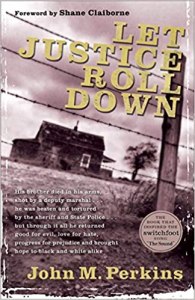
An excerpt from John M. Perkins book, “Let Justice Roll Down”.

“The Spirit of God worked on me as I lay in that bed. An image formed in my mind. The image of the cross—Christ on the cross. It blotted out everything else in my mind.

This Jesus knew what I had suffered. He understood. And he cared. Because he had experienced it all himself.

This Jesus, this One who had brought good news directly from God in heaven, had lived what he preached. Yet he was arrested and falsely accused. Like me, he went through an unjust trial. He also faced a lynch mob and got beaten. But even more than that, he was nailed to rough wooden planks and killed. Killed like a common criminal.

At the crucial moment, it seemed to Jesus that even God himself had deserted him. The suffering was so great, he cried out in agony. He was dying.

But when he looked at that mob that had lynched him, he didn’t hate them. He loved them. He forgave them. And He prayed God to forgive them. “Father, forgive these people, for they don’t know what they are doing.”

His enemies hated. But Jesus forgave. I couldn’t get away from that.

The Spirit of God kept working on me and in me until I could say with Jesus, “I forgive them, too.” I promised him that I would “return good for evil,” not evil for evil. And he gave me the love I knew I would need to fulfill his command to me of “love your enemy.”

Because of Christ, God himself met me and healed my heart and mind with his love. I knew then what Paul meant when he wrote:

Who shall separate us from the love of Christ? shall tribulation, or distress, or persecution, or famine, or nakedness, or peril, or sword? Nay, in all these things we are more than conquerors through him that loved us. For I am persuaded, that neither death, nor life, nor angels, nor principalities, nor powers, nor things present, nor things to come, nor height, nor depth, nor any other creature, shall be able to separate us from the love of God, which is in Christ Jesus our Lord.

Romans 8:35, 37–39

The Spirit of God helped me to really believe what I had so often professed, that only in the love of Christ is there any hope for me, or for those I had once worked so hard for. After that, God gave me the strength and motivation to rise up out of my bed and return to Mendenhall and spread a little more of his love around.

Oh, I know man is bad—depraved. There’s something built into him that makes him want to be superior. If the black man had the advantage, he’d be just as bad, just as bad. So I can’t hate the white man.

The problem is spiritual: black or white, we all need to be born again.

It’s a profound, mysterious truth—Jesus’ concept of love overpowering hate. I may not see its victory in my lifetime. But I know it’s true.

I know it’s true because it happened to me. On that bed, full of bruises and stitches—God made it true in me. He washed my hatred away and replaced it with a love for the white man in rural Mississippi.

I felt strong again. Stronger than ever. What doesn’t destroy me makes me stronger.

I know it’s true.

Because it happened to me.”

-John M. Perkins

In honor of George Floyd

I could write a long list of reasons why I shouldn’t write anything on the turmoil we have seen in Minnesota and around the nation since the death of George Floyd, but the reality is that whatever the list would look like, it would be summed up with the line, “I’m afraid.” It’s a scary situation that holds a lot of emotions for a lot of people.

Being in a rural, and overwhelmingly white, community makes it an even more complicated conversation. But for a decade I lived and did ministry in the Twin Cities. I lived a block from where fires and looting have been taking place. I have stood in the places where I saw protesters clash with law enforcement. I spent a night on a ride-along with a St Paul PD officer. But, even more importantly to me, I have had friends of color that have spelled out personal experiences of racism and fear in their daily lives, including in interactions with law enforcement. 

This is all very real for a great many people. So, maybe what I can do is briefly highlight some things that should be clear to all of us.

  • George Floyd should not have died like that. There is no defense to that heartbreaking act of evil.
  • Our law enforcement is filled with very good people that should be honored and respected, but there are also some very bad people wearing uniforms that need to be identified, called out, and held to a higher standard than they often have been.
  • It should have a powerful impact on all of us to realize that there are large groups of people all around the country that are fearful of the very people they should be the least fearful of-the ones responsible to protect them.
  • We need to respect and listen to the protesters.
  • We need to condemn violence, whether that come in the form of looting and mayhem, or the excessive reactions of some law enforcement officers that have taken place against nonviolent protesters, journalists and aid workers. Again, our law enforcement should be held to a higher standard.
  • Christians should be vocally opposed to racism and violence. If we claim to be pro-life, if we claim to be responsible for the “least of these” (Matt 25:40), then we need to take a stand.

This is a complex issue, and there is disagreement on how to move forward. That’s ok. But we do need to move forward, we need to listen, and we need to love. We cannot continue to sit back and complain any time someone takes a knee without trying to understand the “why” behind the protest. If we are more angry about the protest than we are the injustices that sparked it, that is a problem. We need to be able to distinguish between the legitimate protests and the riots that also have taken place. We don’t have to agree with the protest, but we do need to hear the hurt and the fear behind it, and we need to show love and pursue peace and justice.

I have a lot of other thoughts and ideas. Some of them are almost certainly wrong; many of them would likely make some people very upset; some of them are spiritual, some of them are social, some of them are political. I don’t think now is the time for those statements. I think now is the time to be “quick to hear, slow to speak, and slow to become angry.” (James 1:19) We need peace and healing, and we need a widespread resolve to make things better together.

Please pray with me for peace, for comfort, for perspective, and for justice. May God guide us forward and bring His kingdom to our world.

He has told you, O man, what is good; and what does the LORD require of you but to do justice, and to love kindness, and to walk humbly with your God?

Micah 6:8

Machen on Socialism and the Modern World

“The modern world represents in some respects an enor­mous improvement over the world in which our ancestors lived; but in other respects it exhibits a lamentable de­cline. The improvement appears in the physical condi­tions of life, but in the spiritual realm there is a corre­sponding loss. The loss is clearest, perhaps, in the realm of art. Despite the mighty revolution which has been produced in the external conditions of life, no great poet is now living to celebrate the change; humanity has sud­denly become dumb. Gone, too, are the great painters and the great musicians and the great sculptors. The art that still subsists is largely imitative, and where it is not imitative it is usually bizarre. Even the appreciation of the glories of the past is gradually being lost, under the influence of a utilitarian education that concerns itself only with the production of physical well-being…

“This unprecedented decline in literature and art is only one manifestation of a more far-reaching phenomenon; it is only one instance of that narrowing of the range of personality which has been going on in the modern world. The whole development of modern society has tended mightily toward the limitation of the realm of freedom for the individual man. The tendency is most clearly seen in socialism; a socialistic state would mean the re­duction to a minimum of the sphere of individual choice. Labor and recreation, under a socialistic government would both be prescribed, and individual liberty would be gone. But the same tendency exhibits itself today even in those communities where the name of socialism is most abhorred. When once the majority has determined that a certain regime is beneficial, that regime without further hesitation is forced ruthlessly upon the individual man. It never seems to occur to modern legislatures that although ‘welfare’ is good, forced welfare may be bad. In other words, utilitarianism is being carried out to its logical conclusions; in the interests of physical well-being the great principles of liberty are being thrown ruthlessly to the winds.

“The result is an unparalleled impoverishment of human life.”

-J. Gresham Machen,Christianity and Liberalism, written in 1923

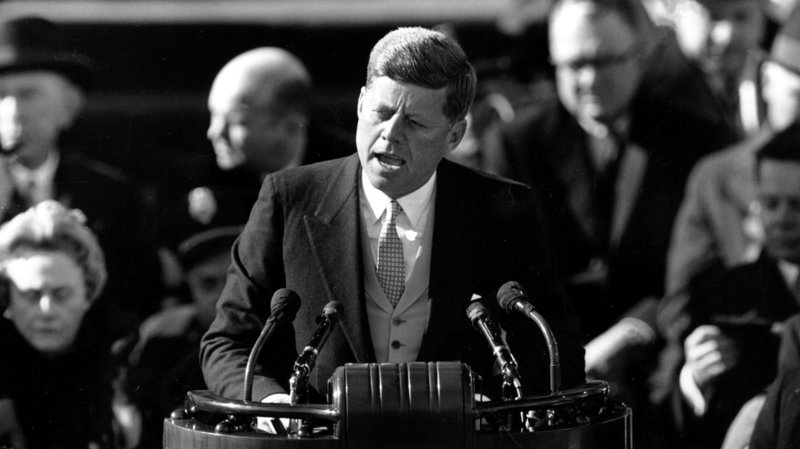
Inaugural Address of John F. Kennedy

Slightly edited for relevance and length

The world is very different now. For man holds in his mortal hands the power to abolish all forms of human poverty and all forms of human life. And yet the same revolutionary beliefs for which our forebears fought are still at issue around the globe–the belief that the rights of man come not from the generosity of the state, but from the hand of God.

We dare not forget today that we are the heirs of that first revolution. Let the word go forth from this time and place, to friend and foe alike, that the torch has been passed to a new generation of Americans–born in this century, tempered by war, disciplined by a hard and bitter peace, proud of our ancient heritage–and unwilling to witness or permit the slow undoing of those human rights to which this Nation has always been committed, and to which we are committed today at home and around the world.

Let every nation know, whether it wishes us well or ill, that we shall pay any price, bear any burden, meet any hardship, support any friend, oppose any foe, in order to assure the survival and the success of liberty.

This much we pledge–and more.

To those old allies whose cultural and spiritual origins we share, we pledge the loyalty of faithful friends. United, there is little we cannot do in a host of cooperative ventures. Divided, there is little we can do–for we dare not meet a powerful challenge at odds and split asunder…

Finally, to those nations who would make themselves our adversary, we offer not a pledge but a request: that both sides begin anew the quest for peace, before the dark powers of destruction unleashed by science engulf all humanity in planned or accidental self-destruction.

We dare not tempt them with weakness. For only when our arms are sufficient beyond doubt can we be certain beyond doubt that they will never be employed.

But neither can two great and powerful groups of nations take comfort from our present course–both sides overburdened by the cost of modern weapons, both rightly alarmed by the steady spread of the deadly atom, yet both racing to alter that uncertain balance of terror that stays the hand of mankind’s final war.

So let us begin anew–remembering on both sides that civility is not a sign of weakness, and sincerity is always subject to proof. Let us never negotiate out of fear. But let us never fear to negotiate.

Let both sides explore what problems unite us instead of belaboring those problems which divide us…

In your hands, my fellow citizens, more than in mine, will rest the final success or failure of our course. Since this country was founded, each generation of Americans has been summoned to give testimony to its national loyalty. The graves of young Americans who answered the call to service surround the globe.

Now the trumpet summons us again–not as a call to bear arms, though arms we need; not as a call to battle, though embattled we are–but a call to bear the burden of a long twilight struggle, year in and year out, “rejoicing in hope, patient in tribulation”–a struggle against the common enemies of man: tyranny, poverty, disease, and war itself.

Can we forge against these enemies a grand and global alliance, North and South, East and West, that can assure a more fruitful life for all mankind? Will you join in that historic effort?

In the long history of the world, only a few generations have been granted the role of defending freedom in its hour of maximum danger. I do not shrink from this responsibility–I welcome it. I do not believe that any of us would exchange places with any other people or any other generation. The energy, the faith, the devotion which we bring to this endeavor will light our country and all who serve it–and the glow from that fire can truly light the world.

And so, my fellow Americans: ask not what your country can do for you–ask what you can do for your country.

My fellow citizens of the world: ask not what America will do for you, but what together we can do for the freedom of man.

Finally, whether you are citizens of America or citizens of the world, ask of us the same high standards of strength and sacrifice which we ask of you. With a good conscience our only sure reward, with history the final judge of our deeds, let us go forth to lead the land we love, asking His blessing and His help, but knowing that here on earth God’s work must truly be our own.